Building an AI-Native Company: Companies That Think, Adapt, and Dominate
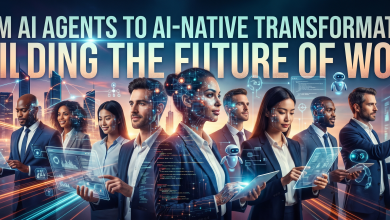
Rather than merely incorporating AI into existing legacy systems—an outdated approach—the true leaders emerged as AI-native companies: organizations deliberately designed from the foundation with artificial intelligence as their essential core.

 In 2025, the business world is undergoing a seismic shift. Forget bolting AI onto legacy systems—that’s yesterday’s playbook.
The real game-changers are AI-native companies: organizations architected from the ground up with artificial intelligence as their core DNA.
These aren’t just tech firms slapping on a chatbot; they’re reimagining every workflow, product, and decision through the lens of intelligent systems.
And the results? Explosive growth, unprecedented efficiency, and valuations that make traditional startups look quaint.
AI Operating System
Rather than merely incorporating AI into existing legacy systems—an outdated approach—the true leaders emerged as AI-native companies: organizations deliberately designed from the foundation with artificial intelligence as their essential core.
Imagine a company where AI isn’t a tool—it’s the operating system. Where small teams outperform corporate giants because agents handle the heavy lifting. This isn’t sci-fi; it’s happening now, with generative AI spending hitting $37 billion in 2025 alone, up 3.2x from the previous year.
The central thesis is that there is a “10x difference” between an organization where 90% of engineers use AI versus one where 100% do. At 100% adoption, the fundamental physics of software engineering change: a single developer can build and maintain complex production apps, managers can meaningfully contribute to code, and the organization can move from a “memo culture” to a “demo culture.”
These companies do not treat AI as a supplementary feature or tool; instead, they rebuild products, workflows, and decision-making processes entirely around intelligent systems. The outcomes include explosive growth, remarkable efficiency gains, and valuations that far surpass those of conventional startups. Generative AI investment alone reached $37 billion in 2025, marking a 3.2-fold increase from the prior year and accelerating this shift.
AI as the Core
A truly AI-native company depends so fundamentally on AI that removing it would render the business inoperable. TikTok exemplifies this principle: its recommendation engine forms the heart of the product, delivering addictive, hyper-personalized content.
By contrast, YouTube offers excellent recommendations yet remains functional as a video-hosting platform even without them. Contemporary standouts include Cursor (from Anysphere), an AI-driven code editor that has achieved roughly $100 million in annualized revenue, a $2.5 billion valuation, and rapid development with a small team. Similarly, Midjourney generates around $200 million annually with only 11 employees, equating to approximately $18 million in revenue per person.
Such companies unlock extraordinary leverage. Small teams iterate at unprecedented speed, products evolve continuously through real-time user data, and they routinely outperform much larger incumbents.
AI-native organizations overturn traditional scaling logic, which tied growth to headcount expansion. They deliver hyper-efficiency, enabling teams of just 1–10 people to accomplish what previously required hundreds, as AI agents manage support, coding, deployment, and other tasks. They foster rapid innovation through constant feedback loops that allow products to improve instantly.
They construct robust moats via proprietary data combined with fine-tuned models, with infrastructure players like Pinecone and Temporal supporting the ecosystem. Revenue per employee reaches levels that dwarf most Fortune 500 companies. In 2025, AI application startups captured twice the earnings of incumbents for every dollar, while vertical AI solutions attracted over $1 billion in funding.
Building an AI Native Company
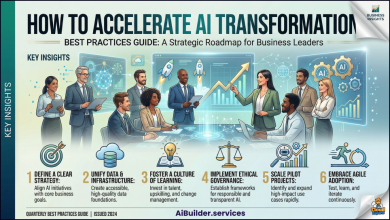
To build an AI-native company, begin by identifying a significant pain point where AI can provide at least 10× value, then design the product natively around models rather than retrofitting them later. Shift from basic chatbots to agentic systems capable of completing entire end-to-end tasks autonomously—a trend evident in recent Y Combinator batches dominated by agent-focused builders.
Cultivate an AI-first culture by recruiting versatile talent fluent in AI tools and integrating those tools across all functions, from brainstorming and coding to marketing and management. Utilize the modern, cost-effective stack, including open models from providers like Mistral and DeepSeek alongside infrastructure from Crusoe or Lambda. Establish data flywheels so that every user interaction enhances the models, generating compounding advantages.
Finally, address ethics and regulation proactively through transparent, bias-mitigated systems to build trust and mitigate risks. Examples such as DevRev (which unifies customer support and development) and Writer (enterprise content generation) demonstrate that this model scales effectively.