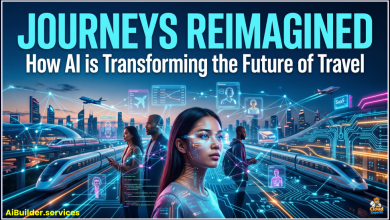
ChatGPT Becomes a Travel Agent – How to Integrate Your Travel Business Directly into AI
OpenAI has significantly expanded ChatGPT's capabilities by introducing app integrations, transforming it from a conversational AI into a versatile platform for seamless interactions with external services.

 OpenAI recently announced it is now accepting submissions from third-party developers to build and publish apps directly within ChatGPT, marking a shift from a limited partner program to an open ecosystem.
Using the beta Apps SDK, developers can create “chat-native” apps that integrate seamlessly into conversations, providing context, interactive interfaces, and actions (e.g., searching trips or making reservations) without leaving ChatGPT.
Approved apps will be listed in a new App Directory at chatgpt.com/apps, where users can browse, search, and connect them via tools, @mentions, or automatic suggestions.
Travel AI
Previously exclusive to select partners like Booking.com and Expedia, this opens the door for any travel brand (e.g., Tripadvisor, AllTrails, Uber, OpenTable) to compete for user attention in AI-driven travel planning. Current travel-related apps include Expedia, Booking.com, Tripadvisor, AllTrails, Uber/UberEats, OpenTable, and TheFork.
For security, apps have limited autonomous actions—sensitive transactions (like payments) hand off to users, though Stripe integration allows embedded checkouts for some purchases, with potential expansion to travel bookings.
Announced in October 2025, this move allows developers to embed apps directly into ChatGPT, enabling users to perform tasks like booking trips or accessing real-time data without switching contexts. For the travel industry, this development promises enhanced personalization and efficiency but also introduces new competitive dynamics and operational challenges. This exploration draws on recent announcements and industry analyses to unpack the mechanics of these integrations and their potential ripple effects on travel operators.
The Mechanics of App Integrations in ChatGPT
OpenAI’s “Apps in ChatGPT” feature, rolled out starting October 6, 2025, lets users interact with conversational apps within their chats. These apps are powered by the newly released Apps SDK, which is available in preview for developers and is open-source, building on the Model Context Protocol (MCP). The SDK extends earlier tools like GPT Actions, which have allowed custom GPTs to call external APIs since 2023. Developers can now submit apps for review and publication in ChatGPT’s app directory, with submissions opening in December 2025.
Integration involves defining how apps respond to natural language queries, providing interactive interfaces (e.g., maps or forms), and handling user authentication securely. For instance, apps can access user-connected accounts, like linking Spotify for playlist creation or Zillow for home browsing. This builds on prior features like file integrations with Google Drive and Microsoft SharePoint, ensuring data flows smoothly into conversations. The result is a more agentic AI, where ChatGPT not only suggests but executes actions through integrated apps.
User Experience: Seamless and Contextual Interactions
From a user’s perspective, apps integrate naturally: ChatGPT suggests relevant apps during conversations, or users can invoke them by name (e.g., “Expedia, find me a flight to Paris”). First-time connections prompt users to authorize data sharing, fostering transparency. Available to Free, Go, Plus, and Pro users (outside the EU initially), this feature supports English-language pilots with plans for expansion.
Early examples highlight versatility: transforming outlines into Canva slide decks or browsing interactive maps in Zillow. In travel, integrations with Expedia and Booking.com allow users to query destinations, compare options, and even complete bookings conversationally. Upcoming additions like Tripadvisor and Uber further enrich this ecosystem, providing real-time data and personalized recommendations.
Opportunities for Travel Operators
For travel operators—ranging from online travel agencies (OTAs) like Expedia to hotels, airlines, and national tourism organizations (NTOs)—these integrations open doors to deeper customer engagement. AI agents in ChatGPT can autonomously research destinations, compare prices, and handle bookings, collapsing the traditional customer journey into minutes. Features like instant checkout enable direct transactions within chats, potentially bypassing intermediaries and boosting direct bookings.
Personalization is amplified: Users receive tailored suggestions based on conversational context, incorporating real-time availability and interactive elements like maps. For business travel, OpenAI’s Agent Mode (integrated with the Atlas browser) allows autonomous tasks like flight and hotel bookings, potentially hybridizing with platforms like Concur and Amadeus for policy-compliant executions. This could streamline corporate trips in the $1.5 trillion sector, blending AI autonomy with managed oversight.
Operators can optimize visibility through generative engine optimization (GEO), making inventory machine-readable and AI-discoverable, shifting from SEO to AI-friendly content on social media like Instagram and TikTok. AI also automates internal tasks, such as pricing analysis and report generation, freeing staff for high-value interactions and potentially handling 30-40% of workplace tasks by 2030.
Challenges and Risks
Despite the promise, challenges abound. Visibility hinges on AI optimization; unadapted operators risk being overlooked in favor of integrated partners. Commission structures raise concerns: OpenAI’s fees on purchases could lead to double commissions or erode OTA margins, while an emerging ad platform might require pay-to-play for prominence.
Data privacy and AI literacy are critical, with NTOs needing policies for responsible use amid risks like hallucinations or biases. User adoption is growing but uneven; while AI influences planning, full autonomy in bookings remains limited due to trust issues. For smaller operators, integrating via the SDK requires technical expertise, potentially widening gaps with tech-savvy giants.
| Aspect | Opportunities | Challenges |
|---|---|---|
| Booking Process | Instant, conversational transactions; direct access bypassing OTAs | Commission fees; dependency on AI visibility |
| Personalization | Real-time, context-aware recommendations | Data privacy concerns; risk of biased suggestions |
| Operations | Automation of tasks like pricing and inventory management | Need for GEO and machine-readable data; skill gaps in AI adoption |
| Business Travel | Hybrid models with managed platforms | Compliance with corporate policies; potential disruption to TMCs |
Future Outlook
Looking ahead, OpenAI’s integrations could redefine travel as AI agents evolve into full-fledged planners, with experts predicting new consumer interactions for discovery and fulfillment. Travel operators should audit their online presence, invest in AI training, and explore custom integrations to stay competitive. As more apps launch—potentially including niche services— the ecosystem will favor those who embrace hybrid human-AI models, ensuring personalized, efficient experiences while preserving trust.
In summary, OpenAI’s app integrations mark a pivotal shift, empowering ChatGPT as a travel hub. For operators, the key is strategic adaptation: leveraging these tools to enhance offerings while navigating economic and ethical hurdles. As 2026 unfolds, this could accelerate the AI-driven transformation already underway in the industry.