The Dawn of Agentic Retail: Google’s Universal Commerce Protocol and Its Implications for Enterprise E-Commerce
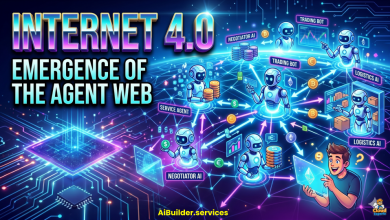
The protocol emerges as a response to the "Agentic Web," where AI agents—such as those powered by Gemini, ChatGPT, Claude, or Perplexity—handle complex tasks like product discovery, cart assembly, and checkout on behalf of users.

 On January 11, 2026, at the National Retail Federation’s annual conference, Google unveiled the Universal Commerce Protocol (UCP), a groundbreaking open-source standard poised to reshape the e-commerce landscape.
This initiative, developed in collaboration with major retailers like Shopify, Etsy, Wayfair, Target, and Walmart, and supported by payment giants such as Visa, Stripe, and PayPal, addresses the growing challenges posed by the rise of AI agents in shopping.
UCP standardizes interactions between AI-driven intent engines and merchant systems, enabling seamless transactions in an era where consumers delegate purchases to intelligent software rather than browsing websites themselves. It proposes a new era for e-commerce.
The Agentic Web
The protocol emerges as a response to the “Agentic Web,” where AI agents—such as those powered by Gemini, ChatGPT, Claude, or Perplexity—handle complex tasks like product discovery, cart assembly, and checkout on behalf of users.
This shift marks a departure from traditional e-commerce models, creating what industry experts call the “N x N integration problem.”
Without standardization, every AI agent would require custom integrations with every merchant platform, leading to a chaotic web of connections that stifles scalability and innovation. UCP simplifies this by providing a unified language for commerce primitives, allowing merchants to “configure once, distribute everywhere.” As Google describes it, this creates a common framework where agents and systems interoperate effortlessly, much like HTTP standardized the web.
The Battle for the Universal Interface
At its core, UCP is more than a technical fix; it’s a strategic play in the “War for the Interface.” It counters aggressive moves by competitors like Amazon, whose “Shop Direct” and “Buy for Me” features have drawn criticism for scraping retailer data without consent and bypassing merchant controls.
By keeping retailers as the Merchant of Record (MoR) and owners of customer data, UCP fosters a federated network that preserves brand independence while tapping into AI-driven distribution channels. This positions Google and its partners as defenders of retailer autonomy in an increasingly automated marketplace.
To grasp UCP’s significance, consider the evolution of digital commerce. The first era, Web 1.0, focused on destination sites where users navigated independently, with no real integration needed.
Web 2.0 brought platform centralization, with marketplaces like Amazon aggregating demand and retailers syndicating catalogs via feeds.
Now, in the Agentic Commerce era, humans express high-level intents—”Buy a family camping kit under $500, delivered by Friday”—and AI agents decompose these into actionable transactions. This removes the “human-in-the-loop,” shifting the customer from a browser-wielding individual to an API-calling software entity.
Agent to Agent Commerce
The “N x N” bottleneck exacerbates this transition. With dozens of AI foundations and millions of merchants on varied stacks (e.g., Shopify, Salesforce, or custom systems), bespoke integrations are unsustainable.
A developer building a specialized agent, like a fashion stylist, would otherwise need tailored connectors for each platform. UCP resolves this by defining standardized primitives such as “Cart,” “Line Item,” “Discount,” and “Checkout.” Released under the Apache 2.0 license on GitHub, it’s designed for community input, echoing the open standards that built the internet.
For enterprise retailers, adopting UCP is existential. Traditional websites are losing relevance as traffic moves from “Search -> Click -> Browse -> Buy” to “Prompt -> Recommendation -> Consent -> Transaction.” In this new flow, AI mediates merchandising, cross-sells, and presentation.
Retailers unable to provide real-time, structured data on inventory, pricing, and compatibility risk being sidelined. UCP signals a pivot from Search Engine Optimization (SEO) to Agent Engine Optimization (AEO), where optimizing for machine interactions determines market share.
Agent Standards and Models
Architecturally, UCP is a specification, not software, emphasizing four decoupled roles to build trust and flexibility:
- Platform (Agent): Parses user intent, discovers merchants, orchestrates carts, and presents options (e.g., Gemini or ChatGPT).
- Business (Merchant): Hosts catalogs, validates inventory, calculates prices (including taxes and shipping), and fulfills orders (e.g., Target).
- Payment Service Provider (PSP): Handles transactions, settlements, and refunds (e.g., Stripe).
- Credential Provider (CP): Manages payment tokens and user consent proofs (e.g., Google Wallet).
This separation ensures sensitive data like credit card details remains tokenized, never exposed to the agent. Merchants declare capabilities in a /.well-known/ucp manifest file, enabling dynamic discovery. Key features include:
- Discovery and Manifest Negotiation: A JSON document detailing supported versions, endpoints, extensions (e.g., loyalty programs), and payment constraints. This allows loose coupling—merchants can add features like subscriptions, and agents detect them automatically.
- Checkout Capability: A state machine via API, starting with session creation, managing states (e.g., draft to ready_for_payment), and injecting merchant-specific logic. The merchant controls pricing rules, preventing agents from overriding complex engines built over years.
- Identity Linking and Mandates: OAuth-based linking for personalized data, plus Agent Payments Protocol (AP2) mandates—cryptographic proofs of user authorization to mitigate disputes from erroneous AI orders.
UCP’s transport agnosticism further enhances adaptability, supporting REST/HTTP for legacy systems, Model Context Protocol (MCP) for LLM tools, and Agent2Agent (A2A) for direct AI communications.
Reference Blueprint
Google’s reference implementation accelerates adoption across three surfaces.
First, “AI Mode” in Search and the Gemini app integrates UCP for conversational shopping. A query like “best running shoes for flat feet” triggers real-time merchant queries for stock and sizing, culminating in native checkout via Google Pay. Retailers must index products in Google Merchant Center and comply with UCP to participate, incentivizing early adoption for lower-friction conversions.
Second, the “Business Agent” feature lets retailers deploy branded AI on search results pages (SERPs). Trained on proprietary data like customer service logs and product manuals, these agents preserve brand voice, avoiding dilution by generic AIs. This counters fears of commoditization, allowing enterprises to maintain differentiated experiences while leveraging Google’s distribution.
While the report cuts off mid-discussion of Business Agents, the implications are clear: UCP heralds a paradigm where commerce is conversational and automated. Enterprises must rethink IT architectures, prioritizing API-first designs and real-time data feeds. Marketing shifts to AEO, optimizing product data for AI comprehension—structured attributes, rich descriptions, and compatibility metadata become crucial.
Challenges remain. Adoption requires significant backend overhauls, potentially favoring tech-savvy giants over smaller players. Privacy concerns arise with deeper AI-merchant integrations, necessitating robust consent mechanisms. Geopolitically, UCP could fragment further if competing standards emerge, though Google’s consortium approach aims for unity.
The Future for Digital Business Models
Ultimately, UCP democratizes agentic retail, empowering enterprises to thrive in an autonomous consumer world.
By standardizing the invisible digital shelf, it ensures retailers aren’t bypassed in the AI rush. As the protocol gains traction, it could redefine e-commerce, making seamless, intent-driven shopping the norm. For forward-thinking leaders, investing in UCP compliance isn’t optional—it’s the key to unlocking the next trillion-dollar wave in retail innovation.