Digital Identity for Autonomous AI Agents: Open Standards, Cryptographic Innovations, and Governance Frameworks
Autonomous AI agents need decentralized digital identities using DIDs, VCs, ZKPs, and standards like AIP/DNSid for secure, traceable actions, governance, and economic activity in a hybrid human-machine economy.

 The rise of generative AI has driven a shift from passive language models to autonomous, goal-oriented AI agents.
These agents execute complex multi-step workflows, integrate with external systems, and conduct independent economic transactions in areas like code deployment, infrastructure management, financial trading, and supply chain operations.
Projections for 2026 highlight explosive growth in non-human identities (NHIs)—including agents, APIs, and microservices—at around 44% year-over-year. This pushes machine-to-human ratios in enterprises toward 144:1, fundamentally changing risk profiles. Networks like Proof already secure over $640 billion in transactions and are adapting to support AI agents acting for verified humans.
Traditional Identity and Access Management (IAM) systems, designed for human users with static credentials, MFA, and session-based controls, cannot handle agents that operate at machine speed, spawn parallel threads, and require persistent, delegable permissions across distributed environments. Studies show nearly 80% of organizations lack real-time visibility into agent behavior, creating major gaps in auditability, security, and compliance.
A new decentralized identity infrastructure is emerging, supported by NIST, IETF, W3C, FIDO Alliance, and others. This framework emphasizes cryptographic verification, persistent identities, and links to human principals for trust, accountability, and scalable deployment in a hybrid human-machine economy.
Architectural Foundations
Agent identity differs markedly from traditional service accounts or API keys, which tie to specific endpoints but lose continuity and accountability across platforms. Standards now focus on durable, cryptographically verifiable identifiers and dynamic access controls.
- SCIM (System for Cross-domain Identity Management): Offers RESTful APIs and JSON schemas for provisioning, updating, and revoking identities across systems (though it does not handle authentication itself).
- NGAC (Next Generation Access Control): Uses a graph-based model of users, objects, attributes, and policies. It supports event-driven updates, dynamic delegation, and least privilege—ideal for context-changing agent operations.
Decentralized Identifiers (DIDs) from W3C serve as core trust anchors. DIDs provide globally unique, self-sovereign, cryptographically verifiable identities independent of centralized providers (DID v1.1 advanced in early 2026). Agents maintain persistent identity across boundaries.
The IETF’s Agent Reasoning Protocol (ARP) v2.0 favors did:web (leveraging HTTPS) to anchor identities and reduce hallucinations by tying agents to verified data sources.
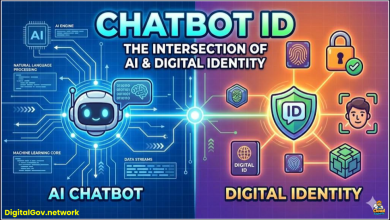
DNSid, launched by Identity Digital, acts as a neutral “birth certificate” for agents. It records unique ID, ownership, transfers, and revocation using DNS, PKI, and blockchain. It is vendor-neutral, globally resolvable, verifiable, and durable across migrations, decoupling ownership from runtime security.
The IETF Agent Identity Protocol (AIP) provides an end-to-end framework using did:aip, principal/credential tokens, and capability-based authorization. Cryptographic delegation chains ensure actions trace back to human or organizational principals (meeting NIST non-repudiation standards). It supports chained approvals, context-scoped permissions, and validation without centralized providers.
Cryptographic Validation: VCs and ZKPs
Agents must prove identity, capabilities, compliance, and risk posture across boundaries while protecting proprietary model details and human privacy.
Verifiable Credentials (VCs) are cryptographically signed assertions (like digital passports) issued by trusted parties. They include provenance, behavioral scope, training compliance, and security posture. Verification uses decentralized PKI, enabling “identity-first governance” with auditable, intervenable actions (e.g., via providers like Truvera).
Zero-Knowledge Proofs (ZKPs) and zkML allow agents to prove statements (e.g., compliance, inference validity, model integrity) without revealing sensitive data. Applications include Proof of Inference/Training for regulated sectors, continuous monitoring via techniques like LZJD for model drift detection, and hybrid STARK/SNARK pipelines for efficient on-chain verification.
Hardware roots of trust (e.g., secure enclaves, quantum-enhanced methods) and projects like World ID (ZKP-backed iris scans) or Human.Tech (2PC AI wallets) link agents to verified humans, mitigating Sybil attacks while preserving privacy.
Multi-Agent Systems and Interoperability
Multi-Agent Systems (MAS) dominate, with specialized agents collaborating via shared memory and task graphs. Each needs discrete identities, scoped permissions, and audit trails. Best practices include hierarchical designs and explicit policies to limit blast radius.
The IETF’s CDI-Agent framework enables cross-domain collaboration while preserving sovereignty. It uses Domain Federation Protocol (hierarchical/transitive trust, rapid establishment) and Agent Delegation Protocol (context-aware, continuous authentication).
Formal Resource Governance: Agent Contracts
Early deployments suffered runaway costs (e.g., $47k bills from unmonitored loops). Agent Contracts formalize bounds as tuples covering inputs/outputs, resource constraints (tokens, API calls), temporal limits (TTL), and success criteria. Violations trigger automatic termination.
“Conservation laws” ensure delegated budgets in hierarchies do not exceed parent limits, enabling safe recursive delegation. Frameworks define autonomy levels (L0–L5) for permission management. Empirical results show major reductions in consumption and variance.
Security, Threats, and Zero Trust
Agentic threats differ from traditional ones: indirect prompt injection, identity spoofing, human overload, communication poisoning, and internal specification gaming. Zero Trust evolves to continuous behavioral telemetry and runtime enforcement (e.g., IBM Sovereign Core for compliance monitoring and sovereign boundaries).
Dynamic revocation via AIP Revocation Objects, layered kill switches, pre/post filters, and immutable logging are essential, as simple termination may not recall child agents.
Economic Autonomy
Agents increasingly hold cryptographic wallets for direct transactions, compute procurement, and revenue generation (e.g., Truth Terminal, Spore.fun). ERC-8126 on Ethereum provides a multi-layer verification standard (ETV, SCV, WAV, WV) yielding a 0–100 risk score using ZKPs for privacy. It supports micropayments and post-quantum security.
Reputation systems (e.g., via AIP endorsements tied to persistent DIDs) prevent Sybil attacks and non-transferable bad reputations.
Legal, Regulatory, and Governance
The EU AI Act imposes risk-based obligations, transparency, and oversight on high-risk agents, with heavy fines. Combined with the Product Liability Directive, it enables strict liability for defects without proving negligence. Identity infrastructure and audit trails become key evidentiary tools.
In the US, NIST’s AI Agent Standards Initiative and Risk Management Framework set benchmarks for “reasonable care.” Low current adoption of full security approvals (around 14%) underscores urgency.
Conclusion
Open standards (DIDs, AIP, DNSid, SCIM/NGAC), cryptographic tools (VCs, ZKPs), resource contracts, and regulatory frameworks are creating a robust foundation for trustworthy autonomous agents. This infrastructure anchors actions to verifiable principals, mitigates risks like runaway execution or injections, and enables secure cross-domain economic activity. Verifiable decentralized identity is now foundational to the agentic digital economy, balancing innovation with accountability.