JPMorgan Chase: Architecting the World’s First Fully AI-Powered Megabank
This strategy positions JPMorgan as a "Frontier Firm" in banking, aiming for full AI integration across all business units by year-end.

 In the high-stakes arena of global finance, JPMorgan Chase is not merely adopting artificial intelligence—it’s reengineering its $850 billion empire around it.
The bank, led by CEO Jamie Dimon, has committed $18 billion to technology spending, with a significant chunk fueling AI initiatives that span fraud detection, client advisory, and operational automation.
This strategy positions JPMorgan as a “Frontier Firm” in banking, aiming for full AI integration across all business units by year-end, where agentic AI handles multistep workflows and humans focus on strategic oversight.
With over 450 generative AI use cases deployed and 200,000 employees empowered by tools like the proprietary LLM Suite, JPMorgan’s transformation is yielding $2 billion in annual productivity gains while reshaping the future of work in finance. This article unpacks the bank’s AI blueprint, from foundational investments to real-world impacts, drawing on executive insights and recent milestones.
The Vision: From Experimentation to AI Equilibrium
JPMorgan’s AI journey traces back to early machine learning pilots in the 2010s, but generative AI marked the inflection point. In 2023, as competitors hesitated, the bank launched three back-office proofs-of-concept, rapidly scaling to 450+ use cases by mid-2025. Chief Analytics Officer Derek Waldron describes this as building an “AI-first bank culture,” where AI is not a bolt-on but the operating system for knowledge work.
At the core is LLM Suite, a custom platform aggregating third-party large language models (LLMs) like those from OpenAI, updated biweekly with proprietary data from petabytes of internal sources. Rolled out to 140,000 workers in 2025, it automates tasks like generating investment banking decks in 30 seconds—tasks that once took hours. Dimon, a vocal AI proponent, emphasized in his 2025 annual letter that “AI will change your jobs, but it may eliminate some careers as well,” underscoring a reskilling imperative amid projections of 15 million hours saved annually.
The strategy follows a “Three Horizons” framework: short-term efficiency gains (e.g., back-office automation), medium-term client-facing enhancements, and long-term agentic AI for autonomous decision-making. By November 2025, the bank achieved “AI equilibrium”—spending $2 billion yearly on development while saving an equivalent in productivity—setting the stage for first-mover dominance.
Key Pillars of JPMorgan’s AI Strategy
JPMorgan’s approach is holistic, blending massive investment, data readiness, and ethical governance. Chief Data, Analytics & AI Officer Teresa Heitsenrether oversees this, establishing policies for firmwide adoption while fostering a culture of continuous improvement.
1. Massive Financial Commitment and Infrastructure
- Budget: $18 billion in 2025 tech spend, up $1 billion from 2024, with $4 billion earmarked for AI and cloud upgrades. This funds 80% cloud migration by year-end, enabling scalable AI deployment.
- Data Readiness: A 2024 chief data office centralizes petabytes of data, making it “AI-ready” through synthetic data generation and bias mitigation. Tools like EVEE Intelligent Q&A ensure secure, context-aware data access.
2. Human-AI Collaboration and Upskilling
- Training: “Learn-by-doing” programs embed AI into workflows, with 200,000 employees accessing tools via LLM Suite. Heitsenrether stresses augmentation over replacement: AI handles routine tasks, freeing humans for high-value work.
- Agentic Focus: AI agents act as “co-pilots,” e.g., in threat modeling (AITMC) or performance reviews, with human-in-the-loop validation. This balances efficiency with ethical oversight, projecting no net headcount reduction but reallocation to innovation.
3. Research and Partnerships
- Internal R&D: The AI Research team advances agentic systems for multi-step tasks, like financial scenario simulation. Collaborations with Harvard Business School yield case studies on GenAI leadership.
- External Ties: Partnerships with OpenAI and cloud providers accelerate LLM integration, while ethical AI initiatives address bias via synthetic data.
| Pillar | Key Investments | Focus Areas | Expected ROI |
|---|---|---|---|
| Financial & Infrastructure | $18B tech budget; Cloud migration | Data centralization, LLM Suite | $2B annual savings |
| Human-AI Balance | Learn-by-doing training; 200K users | Upskilling, agent co-pilots | 15M hours saved/year |
| Research & Ethics | AI Research team; Partnerships | Agentic AI, bias mitigation | 20% sales growth |
Flagship AI Use Cases: From Back-Office to Frontline
JPMorgan prioritizes high-impact domains: credit, fraud, marketing, operations, and banker enablement. Here’s how AI is deployed:
- Fraud Detection and Risk Management: AI agents monitor transactions in real-time, flagging anomalies with 99% accuracy—reducing false positives by 30%.
- Investment Banking and Advisory: IndexGPT crafts personalized portfolios using market predictions; Coach AI provides wealth managers instant insights, boosting client satisfaction by 25%.
- Legal and Compliance: Contract Intelligence (COiN) automates document reviews, slashing processing time from 360,000 hours annually to minutes.
- Customer Service: EVEE handles 2.5 billion interactions yearly, resolving queries 40% faster in call centers.
- Operations and Marketing: Agents optimize payments and personalize campaigns, contributing to 20% gross sales growth in 2024.
In market turmoil, AI-driven sales tools added clients and revenue, proving resilience.
AI Agent for Investment Research with LangGraph
The bank faced a persistent challenge: the manual drudgery of sifting through thousands of financial products to answer complex client queries.
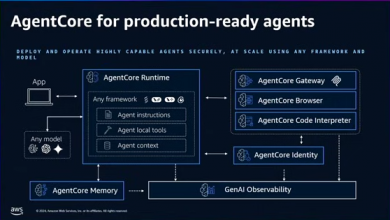
Enter “Ask David,” a groundbreaking multi-agent AI system developed by the firm’s Private Bank investment research team. Built using LangGraph—a flexible framework from LangChain for orchestrating stateful, multi-actor applications—this AI agent automates data retrieval, analysis, and insight generation, slashing research time from hours to seconds while maintaining human oversight for accuracy.
Launched in early 2025, Ask David represents a pivotal step in J.P. Morgan’s broader AI strategy, which has already delivered $1.5 billion in cost savings across fraud prevention, personalization, and trading analytics. By blending modular AI agents with retrieval-augmented generation (RAG) and evaluation-driven development, the system not only enhances advisor productivity but also sets a new benchmark for AI in finance.
Challenges and Mitigation: Navigating Risks in a Regulated World
Transformation isn’t without hurdles. Regulatory scrutiny demands robust governance—JPMorgan uses HITL mechanisms and no-external-training policies for LLMs. Job displacement fears are addressed via reskilling, with Dimon advocating redeployment over elimination. Data privacy and bias are tackled through synthetic datasets, ensuring ethical scaling.
Critics, including X discussions, warn of “cognitive deflation” from over-automation, but JPMorgan counters with hybrid models that preserve human intuition.
The Road Ahead: Scaling to Agentic Dominance
By 2026, JPMorgan eyes ubiquitous AI agents for end-to-end processes, from deal origination to execution. With 84 million U.S. customers and $4 trillion in assets, this could redefine banking: faster, smarter, and more inclusive. As Waldron notes, “AI will be transformational in ways we haven’t even thought of.”
JPMorgan’s strategy isn’t just about survival—it’s about leadership in an AI-native financial ecosystem. For peers, the lesson is clear: Invest boldly, govern rigorously, and empower humans to thrive alongside machines. Explore more at jpmorgan.com/technology/ai.