Stripe’s John Collison on How Agentic Commerce Will Reshape the Internet
Stripe Co-Founder explains how AI agents will automate discovery, comparison, and purchases, ending keyword search and forcing businesses to optimize for machine intelligence.

 The internet is made for shopping. For years, the main inputs for e-commerce transactions involved targeted ads, algorithmic recommendations, SEO, and lots of mindless scrolling.
But agentic commerce might represent a sea change for e-commerce: With the rise of AI agents doing shopping on behalf of consumers, how are retailers going to adapt?
John Collison, co-founder of the financial services and payment processing company Stripe, has first hand experience with all the ways e-commerce has changed in the last decade, and he thinks agentic commerce is going to completely transform the online shopping experience.
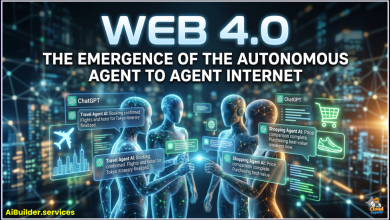
In a recent appearance on Bloomberg’s Odd Lots podcast the Stripe co-founder outlined a vision for the future of online commerce that goes far beyond incremental improvements in checkout flows or recommendations. Agentic commerce—where AI agents research, compare, negotiate, and execute purchases on behalf of users—represents a structural shift in how the internet facilitates economic activity.
Collison, whose company powers payments for millions of businesses and sits at the center of digital transactions, argues that this evolution will render many foundational elements of today’s e-commerce obsolete while creating new opportunities for those who adapt.
The End of Keyword Search as We Know It
One of Collison’s most striking observations is that keyword search is a “ridiculous” way to find things to buy. Traditional search-based discovery, SEO, endless scrolling, and human-targeted advertising were optimized for capturing attention in a world where humans do the browsing and deciding. Agentic systems change the buyer entirely.
Instead of typing queries and sifting through results, users (or their agents) will describe needs in natural language. An AI might handle everything from “find me a reliable mid-range laptop for software development under $1,200 with good battery life” to complex, multi-step tasks like planning a trip or outfitting a home office. Agents evaluate options programmatically based on structured data, pricing transparency, reviews, compatibility, and user preferences.
This compresses the traditional buying funnel. Discovery, evaluation, and transaction can happen in one conversational or agent-driven interface, often without leaving the AI platform (e.g., within ChatGPT, Claude, Gemini, or similar tools).
From Human Eyeballs to Algorithmic Appeal
A core implication is that brands and retailers must optimize for AI agents in addition to—or increasingly instead of—human psychology. Product data, descriptions, APIs, return policies, and structured schemas become critical inputs that agents parse at scale. A site that ranks well for human search but provides poor machine-readable data risks losing visibility.
Collison notes that advertising dynamics will evolve. While some brand advertising may persist because humans remain in (or oversee) many loops, agents are less swayed by emotional appeals or flashy creative and more focused on outcomes, specs, value, and reliability. Research cited in discussions around this shift suggests AI agents prioritize rational factors, potentially leading to more efficient but also more commoditized markets for many goods.
For high-consideration or taste-driven purchases (fashion, design, experiential goods), full delegation remains challenging. Agents excel at repeatable or utility-maximizing buys (groceries, supplies, travel components) but may struggle with nuanced personal preferences—though this gap is closing as models improve at modeling individual tastes from history and context.
Stripe’s Infrastructure Play
Stripe is actively building the rails for this new era. Key initiatives include:
- Agentic Commerce Suite: Makes products discoverable to AI surfaces, simplifies checkout for agents, and supports agent-initiated payments. Partners and adopters include Etsy, Shopify, Walmart, and various brands.
- Integrations and Protocols: Partnerships with OpenAI, Meta, Google, Microsoft, and others. Development of open standards like the Agentic Commerce Protocol for secure, seamless buying directly in AI chats.
- Agent Wallets and Machine Payments: Adapting Link (with hundreds of millions of consumer wallets) for agent use and enabling agent-to-agent transactions, including via stablecoins through its Tempo subsidiary. Collison has framed agentic commerce and stablecoins as “twin revolutions in intelligence and money.”
As Jeff Weinstein and Steve Kaliski write here, Stripe has introduced the Machine Payments Protocol (MPP), an open, internet-native standard co-authored with its Tempo subsidiary that enables AI agents to discover prices and make autonomous payments programmatically over HTTP.
By reviving the long-dormant HTTP 402 “Payment Required” status code, MPP allows seamless machine-to-machine commerce—such as agents paying per API call—without traditional checkouts, accounts, or human intervention, powering the next wave of agentic commerce.
This protocol, integrated with Stripe’s infrastructure, supports scoped credentials, micropayments, and efficient agent-driven transactions across the web, positioning Stripe as neutral, high-reliability infrastructure: the payment and data layer that works regardless of which AI frontend or protocol dominates.
Broader Implications and Timeline
Collison views this as an extension of long-running efforts to reduce friction in e-commerce. Early forms of “conversational commerce” are already working well today (buying directly in ChatGPT interfaces), with fuller autonomy following. B2B use cases—such as agents handling procurement, domain registration, or cloud resources—are advancing quickly too.
Economically, this could unlock new models: microtransactions, high-velocity automated spending, and bespoke services that agents orchestrate. It shifts power toward better data providers and efficient fulfillers, while challenging pure attention-based platforms. China’s integrated super-app ecosystems (Alibaba, etc.) are already demonstrating scaled agentic flows.
Challenges remain: security and trust (agents spending real money), edge cases in taste and judgment, regulatory questions around autonomous economic actors, and ensuring the transition benefits rather than erodes consumer choice and brand relationships.
Why It Matters
The internet was always built for shopping and information exchange. Agentic commerce supercharges the transactional side by removing human bottlenecks in discovery and execution. For businesses, the message from Collison is clear: treat AI agents as a primary customer segment now. Optimize your catalog, APIs, and policies for machine consumption. Build or integrate with infrastructure that supports agentic flows.
Stripe’s own growth (with strong new business creation reported) and valuation underscore investor belief in this transition. As Collison and others at Stripe emphasize, the companies that thrive will be those that view agents not as a futuristic curiosity but as the next dominant participants in internet commerce.
The precise pace is uncertain, but the direction—toward more autonomous, intelligent, and frictionless economic activity online—appears inevitable. The internet is about to get a lot better at buying and selling, with or without us in the loop for every step.