From Chat to Checkout: How Virgin is Leading the Trend of Embedding Services into ChatGPT
Virgin Atlantic launches the first airline app in ChatGPT, enabling natural-language flight searches with live inventory, summaries, and seamless handoff to booking—pioneering agentic commerce.

 The way we interact with brands online is undergoing a fundamental shift. Instead of navigating through complex websites, clunky menus, or standalone apps, consumers are increasingly bringing the storefront directly to their conversational AI.
Recently, Virgin Atlantic made a landmark move in this space by becoming the first airline to launch a dedicated app directly inside ChatGPT.
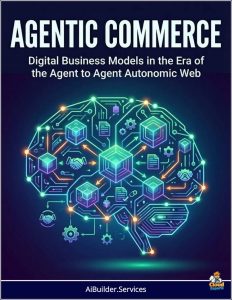
This milestone highlights a broader, rapidly accelerating trend in e-commerce and travel: the rise of “agentic commerce,” where brands embed their live services directly into the AI platforms where millions of users already spend their time.
Here is a look at how Virgin is pioneering this integration, and what it means for the future of consumer technology.
The Broader Trend: Meeting Consumers Where They Are
For years, the digital shopping experience relied on a simple formula: users search on an engine like Google, navigate to a brand’s website or an online travel agency (OTA), and manually filter through options. Today, generative AI is disrupting that funnel.
Consumers are increasingly delegating research-heavy tasks to AI assistants. In response, forward-thinking brands are recognizing that they can no longer passively wait for customers to arrive at their websites. Instead, they are embedding their data and services directly into AI platforms.
Why brands are adopting this strategy:
- Capturing Intent at Inspiration: By existing within ChatGPT, brands catch consumers during the brainstorming phase (e.g., “Where is warm in February?”), rather than waiting for them to finalize their plans.
- Bypassing the Middleman: Direct integrations allow companies to bypass traditional metasearch engines and OTAs, significantly lowering customer acquisition costs (often bypassing OTA commissions that can range from 20% to 30%).
- Frictionless Discovery: Users don’t need to open new browser tabs or download a dedicated brand app just to browse inventory.
Virgin Atlantic’s ChatGPT Breakthrough
In April 2026, Virgin Atlantic took this trend from theory to reality by launching the first native airline integration within ChatGPT. The plugin essentially turns ChatGPT into a highly capable, natural-language travel agent.
How the Virgin Atlantic ChatGPT app works:
- Conversational Queries: Users can type highly specific or beautifully vague prompts, such as, “Show me flights in Premium to Los Angeles next month,” or “What are some good flights to the Caribbean in February?”
- Live Inventory Processing: Instead of generating generic or outdated text, the ChatGPT app pulls real-time inventory, pricing, and availability directly from Virgin Atlantic’s internal systems.
- Clear Summarization: The AI formats the results into plain-text summaries, allowing travelers to effortlessly compare dates, cabin classes, and prices mid-conversation.
- Seamless Handoff: Once a traveler selects their preferred flight, ChatGPT handles the handoff, redirecting the user to Virgin Atlantic’s website or mobile app to securely finalize the booking and process payment.
By keeping the discovery phase inside ChatGPT and the transaction phase on their own platform, Virgin Atlantic strikes a perfect balance between modern convenience and secure, direct-to-consumer sales.
Beyond the Chatbot: Virgin’s Wider AI Ecosystem
The ChatGPT integration is just the tip of the spear for the Virgin brand, which has been aggressively leaning into AI across its various subsidiaries to personalize the customer experience.
- The AI Digital Concierge: On Virgin Atlantic’s own websites, the company has deployed a multimodal, conversational Concierge (built with Tomoro and powered by OpenAI). This allows users who do visit the brand’s site to experience the same natural language flexibility, helping them plan trips, ask loyalty program questions, and manage bookings.
- Virgin Media O2’s Smart Support: The telecoms arm, Virgin Media O2, has recently deployed a free “Smart Support” service leveraging multi-agent systems and models to proactively detect broadband faults and offer personalized troubleshooting. They have also heavily invested in AI for customer service call handling, reducing call times and boosting their Net Promoter Score.
What This Means for the Future of Commerce
Virgin’s move signals a broader shift across retail, travel, and service industries. As AI voice control and natural language processing become standard, the traditional “search and filter” web interface is beginning to look antiquated.
If Virgin Atlantic’s model proves successful, industry observers expect a massive wave of copycat integrations. The next competitive divide for brands won’t just be about having the best website; it will be about having the most accessible, accurate, and conversational data embedded in the AI platforms that run our daily lives. Consumers aren’t rejecting AI in their shopping journeys—they are simply deciding where it belongs, and increasingly, they want it built directly into the conversations they are already having.