Case Study: Driving Operational Excellence through AI-Integrated Contact Centre Transformation at the DVLA
DVLA has transformed its contact centre with Google AI Dialogflow NLP, replacing clunky IVR menus with intent-based routing, halving navigation times from 180 to 90 seconds, automates resolutions, and improves routing accuracy for nearly 1 million monthly callers.

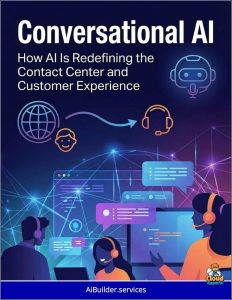 In the landscape of public sector operations, high-volume helplines represent a critical friction point between citizen needs and agency capacity.
Legacy Interactive Voice Response (IVR) systems, rooted in rigid touchtone logic, frequently fail to meet modern Service Level Agreements (SLAs) because they prioritize internal routing hierarchies over the user experience.
As PublicTech reports the DVLA has tackled this scenario with leading edge AI capabilities, cutting call times in half.
The Legacy Environment: Identifying the Friction in Traditional IVR
For a national body such as the Driver and Vehicle Licensing Agency (DVLA), which manages millions of records, the traditional “press-one” model had become an operational bottleneck that obscured citizen intent and degraded service delivery.
Before this transformation, the DVLA’s contact center relied on a touchtone platform that was fundamentally misaligned with digital-first expectations.
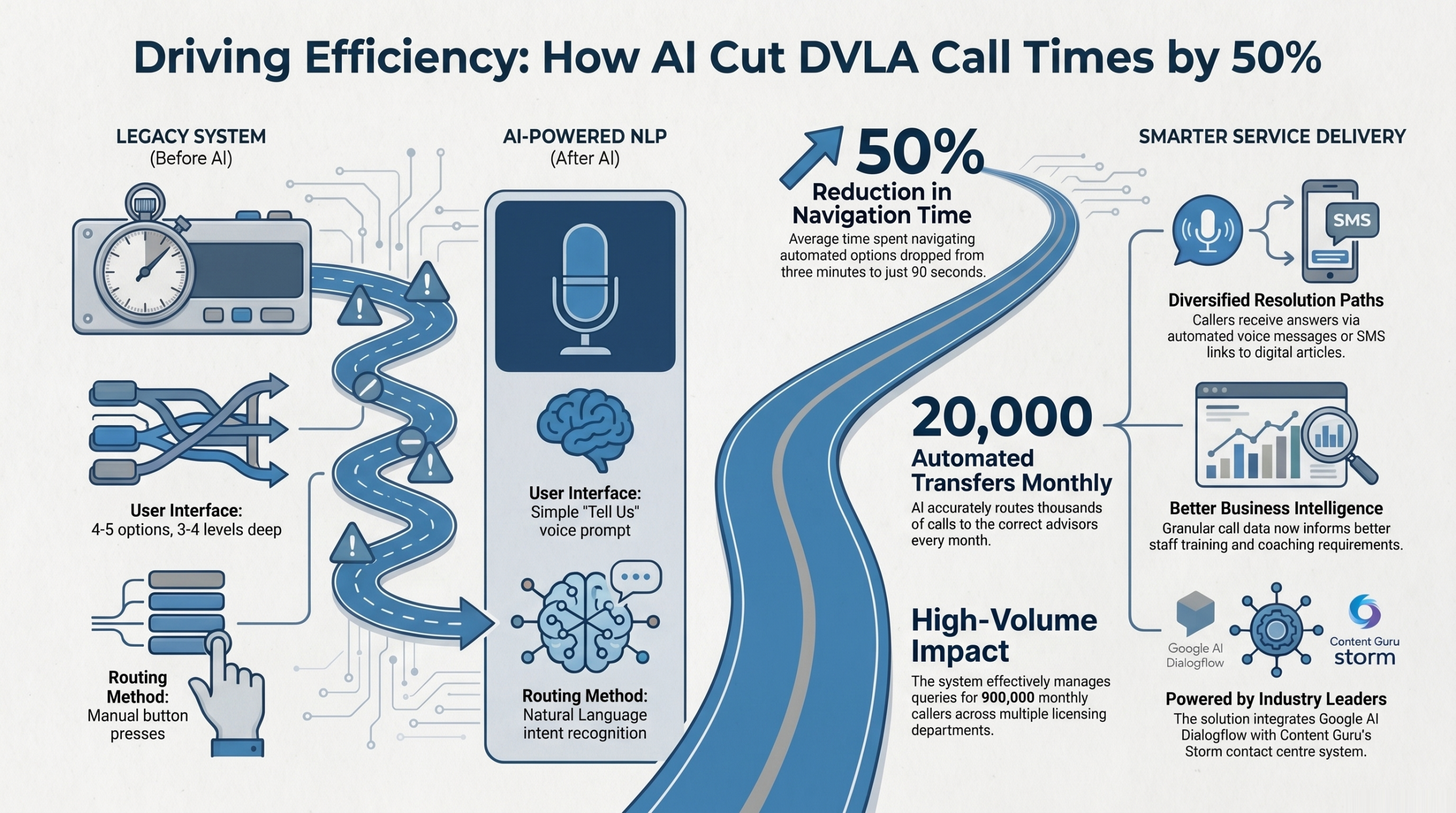
This “before” state forced citizens into an average of three minutes of navigation “limbo” before even reaching a potential resolution point. The system utilized a “clunky” hierarchy featuring four or five options across three or four nested levels.
This structure didn’t just delay the journey; it actively inhibited routing accuracy. Because callers were forced to choose the “best fit” from a limited list of options, the system frequently resulted in misdirected calls and the operational overhead of “double-handling” as advisors manually transferred callers to the correct departments.
Legacy System Bottlenecks
- Prohibitive Navigation Times: Callers spent an average of 180 seconds navigating initial automated prompts before reaching an advisor or service.
- Opaque Hierarchies: Deeply nested menus (three to four levels deep) created a high cognitive load and frustrated citizen attempts at self-service.
- Low Routing Accuracy: Manual button-pressing failed to capture the nuance of complex queries, leading to frequent misdirection and internal transfers.
- Rigid Interaction Design: The requirement to listen to lengthy audio menus before taking action created a static, unresponsive entry point for a modern public service.
This systemic inefficiency necessitated a radical departure from the status quo, moving toward a fluid, intent-based architecture that prioritizes immediate query recognition.
Technical Integration: The Architecture of the AI-Powered Agent
For a national government entity, selecting a technological stack is not merely a technical choice but a strategic one designed to ensure operational resilience at scale.
To modernize an infrastructure handling nearly a million monthly interactions, the DVLA required a solution capable of interpreting natural human speech across a diverse range of complex domains, including general licensing, medical considerations, vehicle management, personal registration, and digital service support.
The DVLA’s transformed architecture utilizes a sophisticated “tell us” intent routing mechanism. The core intelligence is powered by Google AI Dialogflow software, which is seamlessly integrated into the Storm contact center platform provided by Content Guru.
By deploying Natural Language Processing (NLP), the agency has replaced manual menu navigation with a system that interprets the caller’s spoken intent. This allows the system to handle varied queries—from viewing licenses online to complex medical notifications—without forcing the user through a decision tree.
The NLP engine facilitates three primary strategic outcomes:
- Automated Messaging: Direct self-service resolution within the IVR for high-volume, routine inquiries.
- SMS-Triggered Knowledge Distribution: Instant delivery of SMS messages containing direct links to specific DVLA digital services or relevant GOV.UK knowledge articles.
- Human Advisor Escalation: Precision routing to the most qualified specialist advisor when human intervention is required.
By integrating NLP into the foundational IVR, the DVLA has transitioned from a rigid, menu-driven gatekeeper to a responsive infrastructure capable of navigating the complexities of public sector service delivery with unprecedented agility.
Quantitative Impact: Analyzing Efficiency Gains and Volume Management
From a strategic operations perspective, navigation speed and call duration are the definitive KPIs for assessing digital transformation success. Reducing the “limbo” state not only enhances the citizen experience but also unlocks latent capacity within the organization by mitigating the overhead of low-value interactions.
The implementation of the AI-driven agent has delivered a transformative impact on the DVLA’s operational throughput:
- Legacy Navigation Time: 180 Seconds
- AI-Driven Navigation Time: 90 Seconds
- Total Efficiency Gain: 50% Reduction in initial navigation friction
This efficiency gain is particularly significant when viewed through the lens of attainable scale. With 900,000 monthly callers, a 50% reduction in navigation time represents a massive reclamation of citizen time and system bandwidth. Furthermore, the system now successfully automates the transfer of 20,000 calls per month directly to the appropriate advisors, ensuring that high-value human resources are directed where they are most needed.
The system also drives “deflection” or “self-resolution.” When the AI provides a definitive answer via automated message or SMS link, citizens can resolve their issues and hang up without ever requiring an advisor’s time. This shift moves the contact center away from simple time-saving and toward a model of operational intelligence, where data informs how to best manage the agency’s interaction load.
Strategic Intelligence: Data-Driven Decision Making and Governance
The true value of this AI integration lies in its ability to provide granular data that was previously inaccessible under the touchtone model. For government agencies, algorithmic transparency and data granularity are the twin pillars of continuous service improvement and public accountability.
The NLP system provides the DVLA with “more granular and accurate call descriptors” by capturing the actual language citizens use. This enables the agency to perform sophisticated root cause analysis. For instance, if data shows a spike in callers struggling with a specific digital licensing portal, the agency can proactively adjust advisor scripts or website UX in real-time.
This intelligence directly informs:
- Training and Coaching Requirements: Identifying specific domain gaps where advisors may need additional support based on real-world caller intents.
- Service Optimization: Using intent data to refine the routing engine and ensure even higher precision in call placement.
Crucially, the DVLA has fostered public trust by publishing its Algorithmic Transparency Record on GOV.UK. As a strategist, I view this transparency as a prerequisite for the sustained adoption of AI in the public sector. By documenting how these algorithms function, the DVLA moves the contact center from a reactive service to a proactive, optimizing asset that balances innovation with public accountability.
Professional Benchmarks: Lessons for Public Sector Digital Transformation
The DVLA’s successful implementation of an AI-integrated contact center serves as a definitive blueprint for other government departments. By pivoting from a “clunky” hierarchy to an intent-based architecture, the agency has proven that it is possible to reduce operational friction while simultaneously increasing service accuracy.
Key Benchmarks for Operational Success
- Transition to Intent-Based Architecture: Moving away from manual menus to NLP-driven “tell us” routing to eliminate navigation friction and double-handling.
- Multi-Channel Resolution Paths: Integrating SMS and web-link triggers to empower citizens with immediate self-service options.
- Aggressive Friction Reduction: Targeting substantial (50%+) reductions in initial navigation times to reclaim organizational capacity.
- Algorithmic Transparency and Governance: Establishing a public transparency record to maintain trust and ensure ethical AI deployment.
In summary, the DVLA’s digital transformation demonstrates that the future of public sector operations lies in the strategic balance between AI-driven automation and expert human intervention. By using AI to handle the scale and complexity of initial routing, the agency preserves its human capital for the nuanced, complex issues that define high-quality citizen support.